How to Cook Perfect Steak at Home: Your Ultimate Guide
how to cook perfect steak at home

How to Cook Perfect Steak at Home: Your Ultimate Guide

Unlock the secrets to a tender, juicy, and flavorful steak, rivaling your favorite steakhouse experience, right in your own kitchen.

Start Cooking Now

Key Takeaways

  • ✓ Choosing the right cut and thickness is crucial for success.
  • ✓ Proper seasoning is more than just salt and pepper.
  • ✓ Achieving a great crust requires high heat and a dry surface.
  • ✓ Resting the steak after cooking is non-negotiable for juiciness.

How It Works

1
Select Your Steak

Choose a high-quality cut like Ribeye or New York Strip, ensuring it's at least 1-1.5 inches thick for optimal cooking. Look for good marbling, which indicates flavor and tenderness.

2
Prepare & Season

Bring your steak to room temperature for even cooking and pat it completely dry. Season generously with coarse salt and freshly ground black pepper, or your favorite steak rub.

3
Sear to Perfection

Heat a heavy-bottomed pan, like cast iron, to smoking hot with a high smoke point oil. Sear the steak vigorously on all sides to develop a deep, flavorful crust.

4
Finish & Rest

Transfer to an oven or continue cooking in the pan until desired doneness, using a meat thermometer. Crucially, let the steak rest for 5-10 minutes before slicing to redistribute juices.

Choosing the Right Cut and Thickness for Optimal Flavor
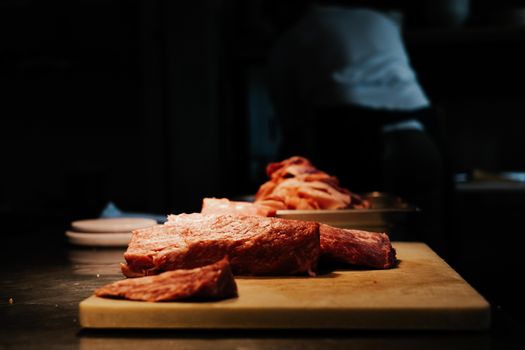
Slices of raw meat on a wooden cutting board in a dimly lit kitchen setting. Photo: Rachel Claire / Pexels
The journey to mastering how to cook perfect steak at home begins long before you even turn on the stove. It starts with the selection of your steak. The cut you choose will significantly impact the flavor, texture, and overall success of your culinary endeavor. For home cooking, some cuts consistently outperform others due to their marbling (the intramuscular fat), tenderness, and suitability for high-heat searing methods. Top contenders for home chefs aiming for perfection include the Ribeye, New York Strip, and Tenderloin (Filet Mignon). The Ribeye is renowned for its rich marbling, which melts during cooking, infusing the meat with incredible flavor and keeping it exceptionally juicy. Its generous fat content makes it forgiving for beginners and a favorite among connoisseurs. The New York Strip, or strip loin, offers a good balance of tenderness and chew, with a distinct beefy flavor and a nice fat cap on one side that renders beautifully. It's leaner than a ribeye but still boasts enough marbling to remain succulent. The Tenderloin, or Filet Mignon, is the most tender cut, virtually butter-like in texture, but it's also the leanest. While incredibly tender, it lacks the intense beefy flavor of a Ribeye or Strip, often benefiting from a flavorful sauce or compound butter. Beyond the specific cut, thickness is paramount. A steak that is too thin (less than 1 inch) will cook through too quickly, making it difficult to achieve a good sear without overcooking the interior. Conversely, a steak that is too thick (over 2 inches) can be challenging to cook evenly without burning the exterior or leaving the center too rare for some preferences. The ideal thickness for home cooking, especially when aiming for that perfect medium-rare, is between 1 and 1.5 inches. This thickness allows enough time for a beautiful crust to form while the interior gradually reaches your desired doneness. When shopping, don't hesitate to ask your butcher for advice or to cut a custom thickness for you. They are a valuable resource in your quest to elevate your home cooking. Always look for steaks that are bright red, without any greyish spots, and have well-distributed marbling throughout. The quality of the meat itself is the foundation of a truly perfect steak, so invest in the best you can reasonably afford.

Mastering the Art of Seasoning and Pre-Cooking Preparation
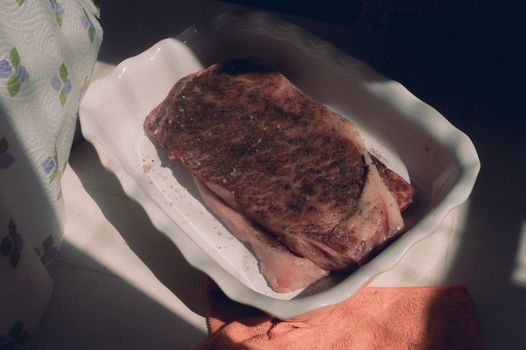
Marbled raw beef steak seasoned and ready in a baking dish, capturing natural light. Photo: Diana ✨ / Pexels
Once you've chosen your prime cut, the next critical steps in how to cook perfect steak at home involve proper seasoning and pre-cooking preparation. These stages are often underestimated but play an enormous role in the final flavor and texture of your steak. The first rule of thumb, and one that many home cooks overlook, is bringing your steak to room temperature. This isn't just a culinary myth; it's a scientific necessity. A cold steak hitting a hot pan will cause the exterior to cook much faster than the interior, leading to an unevenly cooked steak – a grey band on the outside and a raw center. To avoid this, remove your steak from the refrigerator at least 30 minutes to an hour before you plan to cook it. For thicker cuts, even longer can be beneficial, up to two hours. This allows the internal temperature to rise, ensuring more even heat distribution throughout the cooking process. Next, moisture is the enemy of a good crust. Before seasoning, thoroughly pat your steak dry with paper towels. Any surface moisture will steam rather than sear, preventing the formation of that coveted, crispy, deeply browned crust. You want a dry surface for maximum Maillard reaction, which is responsible for the complex flavors and aromas we associate with perfectly seared meat. Now, for the seasoning. While gourmet rubs and complex spice blends have their place, the foundation of a perfect steak often comes down to just two ingredients: coarse salt and freshly ground black pepper. Use a generous hand with the salt; much of it will fall off during cooking, and the meat needs a good amount to penetrate and enhance its natural flavors. Kosher salt or sea salt with larger crystals are preferred over fine table salt because they adhere better and provide a more even seasoning. Apply both salt and pepper liberally to all sides of the steak, including the edges. Some chefs advocate salting hours in advance (a process called dry brining) to draw out moisture and then reabsorb it, leading to an even more tender and flavorful result. If you have the time, experiment with this technique. However, even seasoning just before cooking, after patting dry, will yield excellent results. Remember, the goal is to enhance the steak's natural flavor, not overpower it. This careful preparation sets the stage for a truly remarkable steak experience.

Achieving the Ultimate Sear and Perfect Doneness
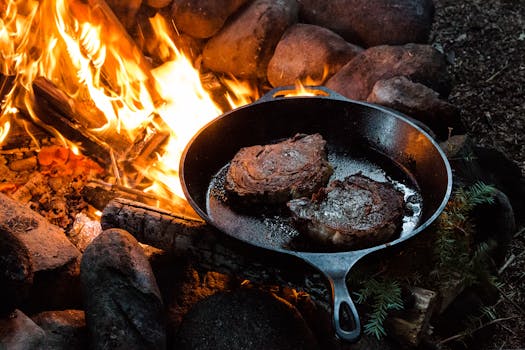
Sizzling steaks cooking in a cast iron pan over a campfire surrounded by logs and rocks. Photo: Loren Castillo / Pexels
The moment of truth in how to cook perfect steak at home arrives with the searing process. This is where the magic happens, transforming a raw piece of meat into a culinary masterpiece with a crust that crackles with flavor. The key to an incredible sear is high heat and the right cooking vessel. A heavy-bottomed pan, ideally cast iron or a thick stainless steel skillet, is indispensable. These pans retain heat exceptionally well, ensuring a consistent high temperature even when the cold steak is introduced. Place your pan over high heat for several minutes until it's smoking hot. Then, add a high smoke point oil, such as grapeseed, avocado, or canola oil, just enough to coat the bottom of the pan. Avoid olive oil for searing, as its low smoke point will cause it to burn and impart a bitter flavor. Carefully place your thoroughly dried and seasoned steak into the screaming hot pan. You should hear an immediate, aggressive sizzle. Resist the urge to move the steak for the first 2-3 minutes. This undisturbed contact time is crucial for developing that deep, caramelized crust. Flip the steak and sear the other side for an equal amount of time. For thicker steaks, you'll also want to sear the edges, holding the steak with tongs to achieve browning on all sides. After the initial searing, you can reduce the heat slightly and continue cooking, flipping every minute or so, for more even cooking and crust development. Many chefs also like to add a pat of butter, fresh herbs (like rosemary or thyme), and smashed garlic cloves to the pan during the last few minutes of cooking, basting the steak continuously with the infused butter. This technique adds immense flavor and a beautiful sheen to the crust. Determining doneness is where a reliable instant-read meat thermometer becomes your best friend. While experienced cooks can tell by touch, a thermometer removes all guesswork, guaranteeing your steak is cooked exactly to your preference. Insert the thermometer into the thickest part of the steak, avoiding bone or gristle. * **Rare:** 120-125°F (49-52°C) – Cool red center. * **Medium-Rare:** 125-130°F (52-54°C) – Warm red center. * **Medium:** 130-135°F (54-57°C) – Warm pink center. * **Medium-Well:** 135-140°F (57-60°C) – Slightly pink center. * **Well-Done:** 140-145°F (60-63°C) – Little to no pink. Remember that the steak's internal temperature will continue to rise by 5-10 degrees Fahrenheit after it's removed from the heat (this is called carryover cooking). So, pull your steak off the heat a few degrees below your target temperature. This precision ensures you achieve the exact doneness you desire. Finally, and perhaps most importantly, after cooking, transfer your steak to a cutting board and let it rest, uncovered, for at least 5-10 minutes. This resting period allows the juices, which have been driven to the center by the heat, to redistribute throughout the meat, resulting in a significantly juicier and more tender steak. Cutting into it too soon will cause all those precious juices to spill out onto the board, leaving you with a drier, less flavorful piece of meat. Patience truly is a virtue when it comes to the perfect steak. For more details on this, explore advanced meat cooking techniques.

Common Mistakes to Avoid and Advanced Tips for Steak Perfection
Bearded chef showcasing raw steaks, perfect for culinary arts and cooking themes. Photo: Los Muertos Crew / Pexels
Even with the best intentions, several common pitfalls can derail your efforts to cook perfect steak at home. Being aware of these mistakes and knowing how to avoid them is just as crucial as understanding the correct techniques. **Common Mistakes to Avoid:** * **Cooking a Cold Steak:** As discussed, a cold steak leads to uneven cooking. Always bring your steak to room temperature before hitting the pan. * **Not Drying the Steak:** Moisture prevents searing. Pat your steak thoroughly dry to achieve that beautiful crust. * **Insufficient Seasoning:** Don't be shy with salt and pepper. A well-seasoned steak is a flavorful steak. * **Crowding the Pan:** If cooking multiple steaks, avoid overcrowding the pan. This lowers the pan temperature, leading to steaming rather than searing. Cook in batches if necessary. * **Flipping Too Often:** Resist the urge to constantly flip. Let the steak sit undisturbed for several minutes on each side to develop a proper crust. * **Cutting Too Soon (No Rest):** This is perhaps the most common and detrimental mistake. Resting is non-negotiable for a juicy steak. Allow at least 5-10 minutes for juices to redistribute. * **Guessing Doneness:** Relying solely on touch or visual cues can be unreliable. Invest in an instant-read thermometer for guaranteed accuracy. **Advanced Tips for Steak Perfection:** * **The Reverse Sear Method:** For thicker cuts (1.5 inches or more), the reverse sear method can yield incredibly even cooking from edge to edge. Bake the steak in a low oven (250-275°F) until about 10-15 degrees below your target internal temperature, then finish with a quick, high-heat sear in a hot pan for the crust. This method virtually eliminates the grey band often seen in traditionally seared steaks. * **Sous Vide Precision:** For ultimate control over doneness, consider sous vide. Cook your steak in a water bath at the exact target temperature, then finish with a quick sear for the crust. This method guarantees perfectly even cooking every time. * **Compound Butters:** Elevate your steak's flavor by finishing it with a pat of homemade compound butter. Mix softened butter with garlic, herbs (rosemary, thyme), shallots, or even blue cheese. The melting butter adds richness and aroma. * **Deglazing the Pan:** After removing your steak, don't let those flavorful browned bits (fond) go to waste. Deglaze the pan with a splash of wine, broth, or even water, scraping up the fond to create a simple, delicious pan sauce. A little butter and herbs can finish it off beautifully. * **Preheating Your Plates:** Serve your perfectly cooked steak on warm plates to prevent it from cooling down too quickly. This simple step can significantly enhance the dining experience. By avoiding these common mistakes and incorporating some of these advanced tips, you'll not only learn how to cook perfect steak at home but also consistently deliver a steak that impresses every time.

Comparison

FeaturePan-SearedReverse SearSous Vide
Best for Thickness1-1.5 inches1.5+ inchesAny thickness
Evenness of CookGoodExcellentPerfect
Crust QualityExcellentExcellentRequires separate sear
Time CommitmentFastModerateSlow but hands-off
Required EquipmentCast Iron PanPan + OvenSous Vide + Pan

What Readers Say

"This guide completely changed how I cook steak! My Ribeyes are now consistently tender and juicy, with an amazing crust. I finally know how to cook perfect steak at home."

Sarah J. · Austin, TX

"The tips on bringing the steak to room temperature and patting it dry were game-changers. My New York Strips have never been this good. Highly recommend this for anyone wanting to master steak at home."

Mark D. · Chicago, IL

"Following the reverse sear method from this article, I achieved a perfect medium-rare from edge to edge on a thick filet. My family thought I ordered takeout from a fancy restaurant!"

Emily R. · Seattle, WA

"Great comprehensive guide. I still need to work on my basting technique, but the core advice on seasoning and resting has already made a huge difference in my steaks. Very helpful!"

David K. · Miami, FL

"As someone who used to overcook steak constantly, this guide gave me the confidence and knowledge to finally get it right. The thermometer advice is spot on, and my steaks are now consistently perfect."

Jessica L. · Denver, CO

Frequently Asked Questions

What's the best steak cut for a beginner learning how to cook perfect steak at home?

For beginners, a Ribeye or New York Strip is highly recommended. Their good marbling makes them more forgiving and flavorful, allowing you to focus on searing techniques without worrying as much about dryness. Opt for a cut that's 1 to 1.5 inches thick.

Is it really necessary to bring steak to room temperature before cooking?

Yes, absolutely. Cooking a cold steak directly from the fridge can lead to uneven cooking, where the outside is overcooked while the center remains raw. Allowing it to come to room temperature (30-60 minutes) ensures more even heat penetration and a more consistent doneness throughout.

How do I know when my steak is done without a thermometer?

While a thermometer is the most accurate, you can use the 'touch test.' A rare steak will feel soft and jiggly, medium-rare will have a slight spring, medium will be firmer but still yield, and well-done will be very firm. Practice is key, but a thermometer is foolproof.

Does resting the steak really make a difference, or is it just a myth?

Resting is crucial and not a myth. When steak cooks, muscle fibers contract, pushing juices to the center. Resting allows these fibers to relax and the juices to redistribute throughout the meat, resulting in a significantly juicier and more tender steak. Skip this step, and your cutting board will be awash in flavor.

What's the difference between pan-searing and reverse searing?

Pan-searing involves cooking the steak entirely in a hot pan, focusing on developing a crust and cooking through. Reverse searing involves slowly cooking the steak in a low oven first to achieve even doneness, then finishing with a quick, high-heat sear in a pan for the crust. Reverse searing is ideal for thicker cuts and offers superior edge-to-edge doneness.

Who should use the methods described to cook perfect steak at home?

Anyone from enthusiastic beginners to experienced home cooks looking to consistently achieve restaurant-quality steak at home will benefit from these methods. If you value flavor, tenderness, and precision in your cooking, these techniques are for you.

Is it safe to eat steak cooked to medium-rare?

Yes, it is generally considered safe to eat steak cooked to medium-rare (internal temperature of 125-130°F). The bacteria that cause foodborne illness are typically on the surface of the steak, which is killed during the searing process. For ground beef, however, a higher temperature is recommended as bacteria can be mixed throughout.

What are the emerging trends in home steak cooking?

Beyond traditional searing, sous vide cooking combined with a high-heat finish is gaining popularity for its unparalleled precision. Also, experimenting with different types of wood or charcoal for grilling (if available) and incorporating global spice blends are emerging trends for enhancing flavor profiles.

Armed with this comprehensive guide, you now have all the knowledge and techniques required to confidently approach how to cook perfect steak at home. Stop settling for mediocre and start creating culinary masterpieces that will impress your family and friends. Your journey to steak perfection begins now!

Topics: how to cook perfect steak at homesteak cooking techniquesbest steak cutsreverse sear steaksteak doneness guide
Leo List
Brampton weed
Adultwork